Why do my leather gloves stretch over time? This question appears simple, but the answer involves leather structure, moisture, heat, and repeated pressure. Leather is not an unchanging fabric. It is a natural material made from interwoven collagen fibers, and those fibers gradually respond to movement. As leather technologist John Watkinson explains, “Leather changes with moisture, heat, and repeated stress.”
That change becomes visible in everyday use. Each time you grip a steering wheel, carry tools, or close your hand, the glove bends in the same areas. Warmth from your skin softens the fibers. Perspiration adds moisture. Pressure then encourages the material to relax and follow your hand’s shape. A glove worn for several hours may feel loose around the knuckles, fingertips, or palm. This is normal, but not always harmless.
Fit matters.
Poor sizing can accelerate stretching. Gloves that feel tight may receive excessive tension, while oversized gloves can wrinkle and deform unevenly. Oily conditioners may also soften leather too much. I have seen gloves lose their original shape after being stored damp and dried beside strong heat. That detail is easy to overlook.
Still, leather quality makes a difference. Full-grain leather usually keeps its structure better than heavily corrected leather, although tanning methods and lining materials also matter. This guide explores why do my leather gloves stretch over time, how daily habits influence that process, and where normal comfort ends. Some explanations are clear. Others require careful inspection.
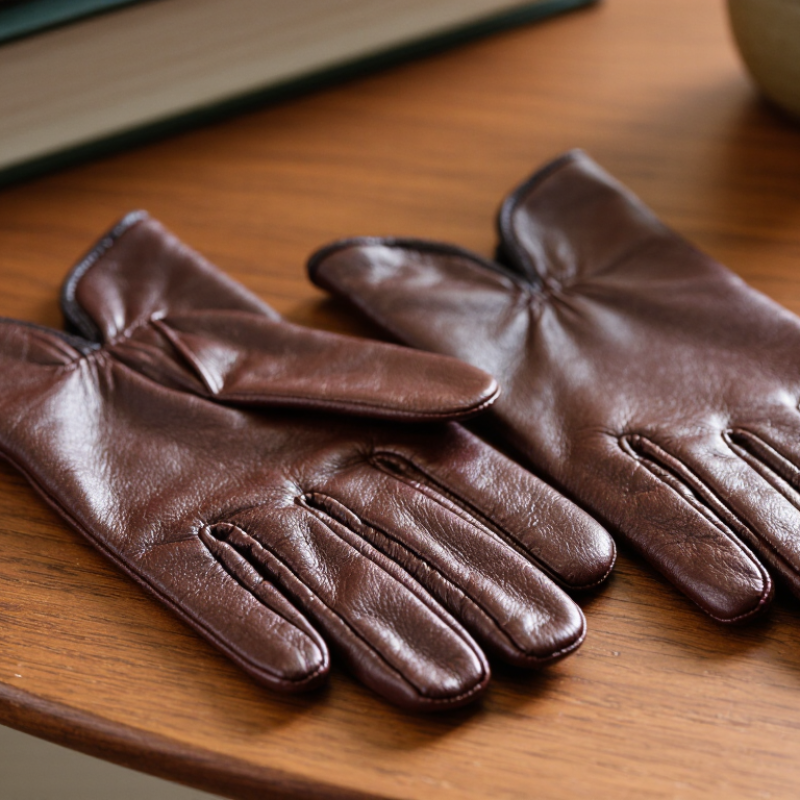
Why Do Leather Gloves Stretch With Regular Use?
Leather gloves stretch because their natural fibers relax under repeated movement, pressure, and body heat. Each time you grip a tool, bend your fingers, or carry a heavy object, the glove experiences tension. Moisture from sweat can soften the leather temporarily, while warmth helps it adapt to your hand’s shape. Areas around the knuckles and fingertips usually change first. This is normal, but stretching can become excessive when gloves are oversized or worn while soaking wet.
In my experience, well-fitted gloves usually soften before they become noticeably loose. Construction also matters. Thin leather may respond faster than dense, reinforced leather. Poor storage can worsen the problem. Direct heat may dry the fibers unevenly and leave the glove misshapen. I once assumed a loose glove had simply worn out, but the real issue was repeated damp storage. That mistake changed how I assess fit and care.
Tips: Choose a close fit without restricting movement. Let gloves air-dry naturally after use. Keep them away from heaters and strong sunlight. A leather conditioner can help, but use a small amount first. Too much product may soften the leather excessively. Check the palm, seams, and finger length regularly. If the glove slips during gripping, replace it rather than forcing an unsafe fit.
Leather gloves rarely stretch because of one factor alone. Their collagen fibers respond to heat, moisture, and repeated movement together. Warmth softens the fiber structure, making it more flexible around the fingers and palm. Moisture has a similar effect, especially from sweat trapped inside the glove.
Movement creates the lasting change. Each grip pulls the leather across the knuckles, while frequent bending gradually reduces resistance in those areas. A glove used for driving may widen near the thumb. A work glove may loosen at the fingertips first. The exact pattern depends on leather thickness, tanning, grain direction, and stitching. These details matter.
I once assumed a damp glove would simply return to its original shape after drying. That explanation was incomplete. Rapid drying near a heater can stiffen the surface and alter the fit unevenly. Slow drying at room temperature is safer, although it cannot reverse every stretch. Sweat also contains salts and oils, which may weaken fibers over time if they remain inside the leather. Measuring the glove before and after use can reveal whether it has stretched or merely softened. That small check is useful.
High-quality leather usually responds gradually. Poorly fitted gloves may appear to stretch faster because the fibers face greater tension. Heat, moisture, and motion are not enemies by themselves. Their combined effect, repeated day after day, changes the glove’s shape.
| Stretch Factor | What Happens to the Leather Fibers | Typical Conditions or Indicators | Effect on Glove Fit | Practical Care Recommendation |
|---|---|---|---|---|
| Natural fiber alignment | Leather contains interwoven collagen fibers. Repeated wearing gradually aligns some fibers in the direction of applied tension. | Most noticeable in high-flex areas such as the palm, knuckles, and finger joints. | A new glove may feel snug at first and become more comfortable after use, with modest localized expansion. | Choose a close but non-restrictive fit; avoid intentionally buying a significantly undersized glove. |
| Moisture absorption | Water molecules enter the collagen structure, reduce friction between fibers, and temporarily make the leather more pliable. | Wet hands, rain, perspiration, or storage in a damp environment. | The glove can deform more easily while wet and may dry with a looser shape if stretched during use. | Allow gloves to air-dry naturally at room temperature while shaped correctly. |
| Heat exposure | Moderate warmth softens oils and increases flexibility. Excessive heat accelerates moisture loss and can permanently alter the collagen structure. | Radiators, hot-air dryers, direct sunlight, hot vehicles, or heated equipment. | The leather may become loose, dry, stiff, brittle, or distorted after repeated overheating. | Keep drying temperatures low and avoid direct contact with heaters or strong heat sources. |
| High humidity | Leather is hygroscopic, meaning it exchanges moisture with surrounding air. Higher relative humidity generally increases flexibility and dimensional movement. | Long-term storage in humid conditions, especially when relative humidity remains above approximately 65%. | The glove may feel softer and may gradually lose its original shape under load. | Store in a clean, ventilated area with stable indoor humidity; avoid sealed damp containers. |
| Repeated hand movement | Bending and gripping apply repeated tensile and shear forces. Fibers gradually accommodate the hand’s movement pattern. | Frequent gripping, tool handling, cycling, driving, or manual work. | Expansion is usually greatest across the palm and around the finger bends rather than evenly across the whole glove. | Use gloves designed with suitable palm allowance and correctly positioned seams or panels. |
| Perspiration and body oils | Sweat adds moisture and salts, while skin oils can soften the finish. Together they may increase flexibility but can also affect surface durability. | Long periods of wear, warm conditions, or intensive physical activity. | The inside may become softer and the glove may gradually conform more closely to the wearer’s hand. | Ventilate gloves between uses and rotate pairs when possible. |
| Leather thickness and stretch direction | Thinner leather generally flexes more easily. Stretch also varies with the hide’s fiber direction and the way pattern pieces are cut. | Thin fashion or driving gloves usually respond differently from thicker work or protective gloves. | Some gloves develop more noticeable movement in one direction than another. | Evaluate fit in the actual direction of hand movement, not only by palm circumference. |
| Tanning and finishing system | Tanning, fatliquoring, coatings, and mechanical finishing change fiber lubrication, stiffness, and resistance to dimensional change. | Different leather types and finishes can show noticeably different break-in and recovery behavior. | Some gloves soften and conform quickly, while others retain a firmer shape for longer. | Follow the care instructions appropriate for the specific leather and finish. |
| Overloading or pulling | Loads beyond the glove’s intended use can create permanent fiber displacement, seam stress, and material deformation. | Using lightweight gloves for heavy gripping, pulling, or abrasive tasks. | Stretching becomes uneven and may be accompanied by seam opening, thinning, or cracking. | Match glove construction and thickness to the intended workload. |
Note: Actual stretch varies with leather species, thickness, tanning, finishing, pattern design, humidity, load, and frequency of use. “Stretch” may include both temporary elastic recovery and permanent shape change.
Leather gloves stretch because hide is a layered, fibrous material. However, the material and pattern decide how quickly that happens. Full-grain leather usually resists deformation better than softer suede or split leather. Its dense grain structure supports the hand more firmly. Suede stretches faster, especially across the palm and thumb. Sheep leather feels flexible sooner than cowhide. It also loses shape more easily under repeated pressure.
The design matters just as much. Gloves with narrow fingers, curved seams, or generous gussets experience higher local tension. Unlined styles usually feel stretchier because nothing restricts the leather. Knitted cuffs can also allow the wrist opening to expand gradually. Heat, sweat, and damp storage accelerate this process. A neat percentage would be convenient, but misleading. Leather varies by animal, tanning method, thickness, and moisture level.
ASTM D2209 evaluates leather tensile strength and elongation, showing why “stretch” should be measured rather than guessed. SATRA glove-testing guidance also separates dimensional fit from mechanical performance. These standards do not provide one universal stretch figure for every glove. Textile Exchange’s 2024 Materials Market Report recorded global fiber production at 124 million tonnes in 2023, while leather remains a separate material category. That distinction matters when comparing glove materials. In practical fitting checks, the palm may remain stable while fingertips loosen first. Many buyers notice this too late.
China Best Leather Gloves: Why Do They Stretch Over Time?
Leather gloves gradually adapt to repeated movement, moisture, and body heat. Their fibers relax, especially around the palm, knuckles, and fingertips. Proper sizing strongly affects this change. A well-fitted glove should feel close without restricting movement. It should allow your fingers to bend naturally, but it should not leave empty space at the fingertips.
A glove that is too large may develop deep palm folds. These folds create extra tension during gripping and can lengthen the fingers unevenly. Loose fingertips may also rub against tools, causing faster wear. A glove that is too small faces another problem. Tight leather stretches under pressure, particularly across the thumb joint and finger seams. That shape may become permanent. In fitting checks, measuring both palm width and the longest finger gives better results than choosing by size label alone. Hands are rarely identical.
Tips: Measure your dominant hand in the evening, when swelling is more likely. Try gloves while making a gentle fist. Your fingertips should touch the leather lightly, not press against it. Avoid buying a larger size for comfort if the palm already fits. A thin liner can help in cold conditions, but it can also make a correctly sized glove feel tight. Check the fit again after several wears. Leather changes, and our first judgment is not always right.
Leather gloves rarely stretch evenly. The palm often loosens before the fingers do. Repeated gripping, sweat, and body heat gradually relax the leather fibers. A glove that feels snug today may feel loose after several weeks. This is especially common when the leather is soft or the glove is slightly oversized. Fit matters.
Choose a size that follows your hand without pressing your fingertips. Extra space creates deeper folds and faster deformation. After use, wipe away moisture with a clean, dry cloth. Keep them dry. Never place wet gloves near a heater, radiator, or direct sunlight. Heat can harden the leather and distort its shape. Let them dry naturally, with the fingers gently straightened.
Use a small amount of suitable leather conditioner when the surface feels dry. Too much conditioner can soften the fibers and increase slippage. Test it on a hidden area first. Store the gloves flat or loosely shaped, rather than crushed in a pocket. Rotating between two pairs can reduce daily stress. Avoid pulling the gloves by one finger when removing them. I have sometimes misjudged how quickly a glove would loosen, especially after outdoor work in damp weather. That experience changed my fitting checks. Measure your hand again when the glove feels unstable, because stretching may reveal an incorrect original size.
Natural fibers relax under movement, pressure, and body heat. Gripping tools creates repeated tension around the palm and knuckles. Moisture can soften the leather temporarily.
The palm, knuckles, and fingertips often change first. The palm may loosen while the fingers still feel snug. Stretching is rarely even.
Yes, sweat can soften leather during use. Repeated dampness may relax the fibers more quickly. Wipe the inside and outside with a dry cloth.
Choose a close fit without restricting finger movement. Fingertips should not press painfully against the glove. Extra space creates deeper folds and faster deformation.
Let gloves air-dry naturally after use. Keep the fingers gently straightened while drying. Avoid heaters, radiators, and strong sunlight.
A small amount may help dry leather remain flexible. Too much conditioner can soften the fibers and increase slippage. Test it on a hidden area first.
Yes, crushed storage can create permanent folds and uneven stretching. Store gloves flat or loosely shaped. Do not leave them tightly packed in a pocket.
Check the palm, seams, and finger length. Measure your hand again if the fit feels unstable. If slipping continues, replace the glove rather than forcing an unsafe fit. I once judged this too late.
Leather gloves naturally stretch over time because their fibers soften and adapt to repeated movement, pressure, and contact with the hand. Heat and moisture make leather more flexible, while frequent bending and gripping gradually reshape the material. This explains why do my leather gloves stretch over time, especially when they are worn for long periods or exposed to damp conditions. Some types of leather and designs with softer, thinner materials stretch more easily than thick, rigid gloves, while loose stitching and larger panels may also contribute to shape changes.
Proper sizing is essential for maintaining a stable fit. Gloves that are too tight may experience excessive tension, while oversized gloves can develop wrinkles and lose their original structure. To reduce stretching, choose the correct size, keep the gloves dry, avoid unnecessary heat, and allow them to rest between uses. Gentle cleaning, suitable leather conditioning, and careful storage can help preserve flexibility without allowing the gloves to become loose or misshapen.

U-Rare Fashion