A silk foulard can refine formal dressing without competing with the occasion. Its soft sheen catches candlelight, while its light weight creates graceful movement around the neck. Yet an attractive scarf can quickly look untidy when the knot is too large or loosely placed. Learning how to tie a silk foulard for a formal event requires more than copying a fashionable fold. It involves fabric control, proportion, and awareness of the complete outfit.
Fashion designer Michael Kors has said, “Accessories are everything. To me, they’re more important than the clothes.” His observation explains why a small silk detail deserves careful attention. A foulard may frame the face, soften a sharp tuxedo, or add color to a simple evening dress. The right method depends on the neckline, jacket shape, scarf size, and event formality. A compact French knot suits a high-neck blouse, while a longer drape may complement an open blazer.
This guide focuses on practical styling choices. It explains how to prepare the silk, position the center, and secure the knot without crushing the fabric. A mirror helps. So does patience. There is no single perfect fold, and even experienced dressers sometimes create uneven ends. That is not a failure. It is a reminder to adjust the scarf after sitting, walking, and turning. Before leaving, check the knot under natural light. Subtle details often decide whether the final appearance feels polished or merely decorated.
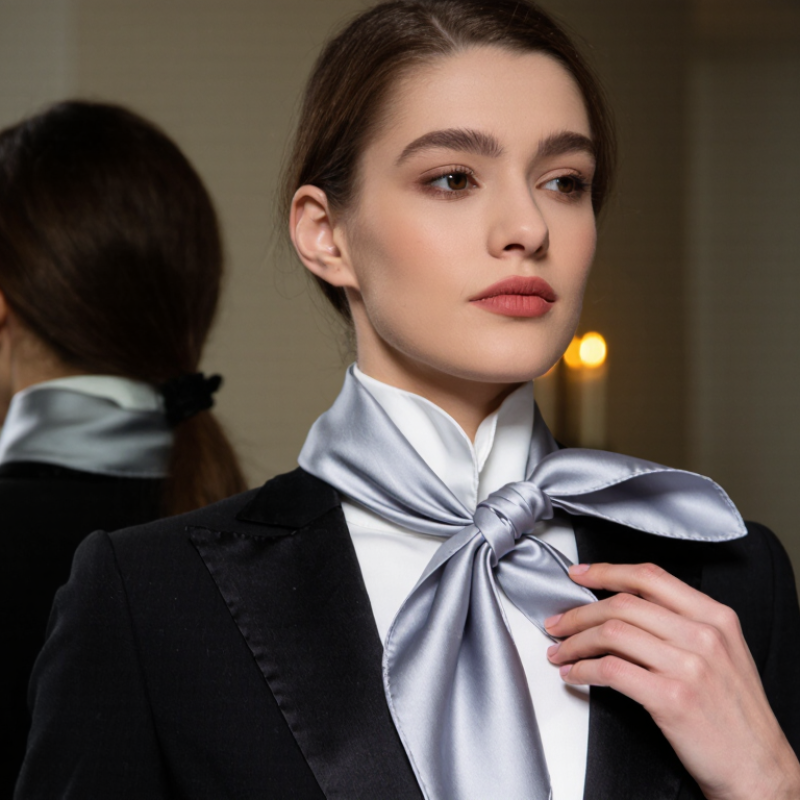
For a formal event, the right silk foulard should look intentional, not theatrical. I usually begin with the invitation, venue, and time of day. A daytime ceremony suits ivory, muted blue, charcoal, or a restrained geometric print. Evening allows deeper jewel tones and a gentle sheen. Keep it quiet.
Fabric weight matters more than many shoppers expect. A medium-weight silk twill holds a clean knot and resists collapsing near the collar. Satin catches more light, so it needs simpler clothing and careful styling. Check the hem by hand; neat, even stitching signals better construction. Choose a size that leaves enough length for one elegant loop, usually around 65 to 90 centimeters. Try it with the actual shirt or dress. Mirrors mislead.
Before leaving, fold the foulard into a narrow band and center it at the nape. Cross the ends once, then let them fall evenly or secure them beneath the lapel. For a dress, a soft side knot can frame the neckline without competing with jewelry.
I once chose a beautiful high-contrast print that dominated every photograph. It looked refined alone, but not under the venue’s lighting. I still reconsider that choice.
Test the silk under both natural and indoor light, and avoid excessive perfume near the fabric.
How to Tie a Silk Foulard for Formal Events?
Preparing the Foulard with Precise Folds and Smooth Edges
A formal knot begins with preparation, not speed. I place the silk foulard flat on a clean table. The surface should be dry and free from rough fibers. Textile Exchange’s 2024 Materials Market Report places silk below 0.2% of global fiber production. That scarcity makes careful handling especially worthwhile.
I smooth the fabric from the center outward. Then, I fold it lengthwise into thirds. Each pass should create a straight band, with no trapped air or twisted corners. I check both edges against the table’s edge. They must look parallel. A light steam treatment can relax stubborn creases, but direct heat may flatten the silk’s natural texture. Keep the iron away.
I usually leave one end slightly longer before tying. This creates a balanced drop at the collar. For a formal event, I pass the longer end over the shorter end, guide it behind, and pull it through the front loop. The knot should sit close, but never press against the neck. The International Sericultural Commission’s 2023 statistics place annual raw-silk production at approximately 190,000 metric tonnes worldwide. Such a delicate material deserves measured tension. I still misjudge the final length sometimes. That mistake shows immediately. I loosen the knot, realign the edges, and try again. A final touch with clean fingertips removes small ripples. Check the back, too. It is often neglected.
Preparing the foulard with precise folds and smooth edges
This chart shows the approximate width of a 90 cm square silk foulard after each equal fold. Folding from 90 cm to 45 cm, 22.5 cm, and 11.25 cm creates a progressively narrower band, helping maintain clean edges for a polished formal look.
A silk foulard should frame the face, not compete with it. Textile Exchange’s Materials Market Report 2024 places silk below 1% of global fiber production. That rarity makes proportion especially important. Choose a square foulard, preferably about 70 to 90 centimeters wide. Fold it diagonally, then roll the long edge into a soft band. Keep the center slightly wider than the ends.
Place the band around your neck with one side 10 centimeters longer. Cross the longer side over the shorter side. Pass it underneath, then pull it through the opening near your collarbone. Do not tighten immediately. A formal knot needs breathing room. Adjust the front into a narrow, centered shape, leaving two gentle folds visible beneath the knot. The ends should finish near the upper chest, not the waist.
Use a mirror from several angles. Balanced draping is easier to judge while standing naturally. The McKinsey and Business of Fashion State of Fashion 2025 report identifies versatility and perceived value as important fashion priorities. A carefully tied foulard supports both. It can soften a structured jacket without looking careless. I sometimes make the knot too neat, and it loses movement. That small imperfection is worth reconsidering. Silk reflects light quickly, so harsh overhead lighting may exaggerate uneven folds. A final touch with clean hands usually restores the intended line.
For a formal event, a silk foulard should look composed without feeling tight. I usually begin with a clean triangle fold, then place the long edge just below the collarbone. The fabric should rest smoothly against the neck. Leave enough room for one comfortable finger beneath the knot. This small check prevents pressure during a long ceremony or dinner.
Cross the ends once, then guide the upper end through the opening from underneath. Pull gently, not sharply. Silk can crease when forced, and those lines may remain visible under evening light. Adjust both ends until their lengths appear balanced. Perfect symmetry is not always necessary. A soft, one-sided drape can look more natural with a structured jacket. I sometimes loosen the knot slightly after viewing it from the side. That step is easy to forget. It also keeps the foulard from shifting when you turn your head.
For lasting shape, smooth the knot with your fingertips and fold the loose ends along their natural grain. Avoid repeated tightening, which can flatten the silk and make the knot appear stiff. A discreet fold tucked beneath the jacket helps secure the lower edge. Test the arrangement by sitting, walking, and moving your shoulders. If the scarf slides immediately, the knot is too loose. If the neck feels restricted, start again. Comfort is part of formal polish.
| Foulard Preparation | Recommended Knot | Approximate Finished Length | Comfort & Security Technique | Symmetry Check | Shape Retention | Best Formal Use |
|---|---|---|---|---|---|---|
| Quarter-folded, narrow band | Single square knot | 10–14 cm drop below the knot | Place the knot slightly below the base of the neck and leave enough room to slide one finger underneath. | High | High | Structured blazers, tailored dresses, and daytime ceremonies |
| Diagonal fold, medium width | Flat slip knot | 12–18 cm drop below the knot | Cross the ends evenly, pass one end through the opening, and tighten gradually rather than pulling sharply. | Very high | Medium–high | Formal receptions and polished office events |
| Rolled into a slim scarf | Double wrap with front tuck | 8–12 cm visible drop | Wrap once around the neck, tuck both ends under the front loop, and keep the fabric flat to prevent pressure points. | High | Very high | Evening suits and high-neck formal dresses |
| Loose triangular drape | Low half-bow | 18–25 cm below the neckline | Secure the center with a soft half-bow and position it over the sternum, avoiding a tight pull at the throat. | Medium–high | Medium | Gala dinners, cocktail attire, and elegant separates |
| Narrow fold with pointed ends | Front tie with hidden tuck | 10–16 cm drop below the knot | Make the first knot firm, then tuck the shorter end behind the longer end to reduce movement during walking. | High | High | Formal presentations and seated business occasions |
| Full-width shoulder drape | Side shoulder knot | 20–30 cm on the longer side | Set the knot near the shoulder seam and use a discreet silk-friendly clasp beneath the fold if extra stability is needed. | Medium | Medium–high | Long dresses, formal ceremonies, and indoor evening events |
For a formal event, tie a silk foulard with controlled softness rather than excessive volume. Fold it into a narrow band, then place it neatly around the neck. A simple front knot works well with a sharp blazer or a high-neck dress. Keep the knot slightly off-center for a relaxed, polished effect. The silk should feel smooth, never crowded.
Refine the final look by matching the foulard’s finish with your accessories. If your earrings are delicate, choose a flatter knot and let the fabric remain understated. Statement earrings need more space, so position the foulard lower on the neckline. Coordinate tones, not exact colors. A muted foulard can soften a dark suit, while a brighter shade may sharpen a neutral dress. Check the proportions in natural light. Indoor lighting can hide unwanted shine. I sometimes tighten the knot too much, which makes the neck look restricted. Loosening it by one finger-width usually improves movement and comfort.
Tips: Press the foulard lightly before tying it. Avoid visible creases near the knot. Secure loose ends beneath the lapel if the fabric shifts. Test the style while sitting, walking, and turning. Formal dressing is not only about appearance. Practical comfort matters.
Start with the invitation, venue, and time of day. Daytime suits ivory, muted blue, charcoal, or quiet geometric patterns. Evening permits deeper jewel tones and gentle sheen. Keep the design restrained.
Medium-weight silk twill usually holds a clean knot near the collar. Satin reflects more light and needs simpler clothing. Check the hem by hand. Even stitching suggests careful construction.
Choose enough length for one elegant loop, often about 65 to 90 centimeters. Try it with the actual shirt or dress. Mirrors can mislead.
Place it flat on a clean, dry table. Smooth the fabric from the center outward. Fold it lengthwise into thirds. Keep both edges parallel.
Leave one end slightly longer. Cross the longer end over the shorter end. Guide it behind, then pull it through the front loop. Keep the knot close, but not tight.
Leave room for one finger beneath the knot. Pull gently instead of sharply. Sit, walk, and move your shoulders before leaving. Comfort matters.
Not always. Balanced ends look polished, while a soft one-sided drape can suit a structured jacket. I sometimes overcorrect the length. That usually makes the knot look stiff.
Test it under natural and indoor light. A bold print may look elegant alone but dominate photographs. I once made that mistake. Avoid excessive perfume near the silk.
Smooth the fabric with clean fingertips. Light steam may relax stubborn creases, but direct heat can damage its texture. Check the back of the knot, too. It is often neglected.
Learning how to tie a silk foulard for a formal event begins with choosing a piece that complements the occasion, including its color, pattern, size, and fabric quality. Before styling, gently smooth the foulard and fold it with care so the edges remain even and the finished shape looks polished. Precise preparation helps create a neat appearance and prevents unnecessary creases or uneven draping.
For a classic neck tie, place the folded foulard around the neck and form a balanced knot with equal attention to comfort and symmetry. Adjust the length so both sides fall naturally without feeling tight, then secure the knot while preserving the silk’s soft structure. Finally, refine the folds, position the ends neatly, and coordinate the foulard with the outfit, jewelry, and other accessories. A thoughtful final adjustment ensures the overall look remains elegant, refined, and appropriate for a formal setting.

U-Rare Fashion