What Is a Blanket Wrap and How to Style It for Winter?

Time:2026-10-28 Author:Isabella
0%

A blanket wrap is an oversized, rectangular layer worn around the shoulders, neck, or torso. It feels like a blanket, but looks more intentional. Wool, cashmere blends, recycled fibers, and brushed cotton are common choices. Each material behaves differently in cold weather. Wool retains warmth, while lighter blends fold more easily inside a coat. Check the care label before wearing it outdoors. Some fabrics lose their shape after careless washing.

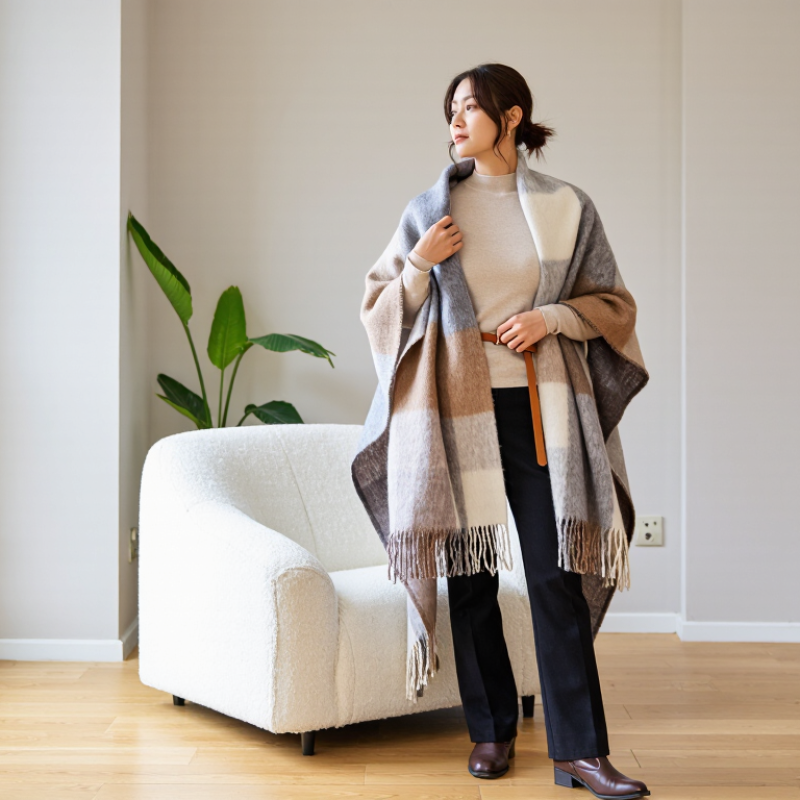
Learning how to style a blanket wrap for winter starts with proportion. Place one end over your shoulder, then let the other side fall near your hip. Pair it with a fitted sweater, straight-leg trousers, and ankle boots for balance. A narrow belt can secure the wrap at your waist. A simple brooch may hold it without creating bulky knots. Neutral shades work with most winter wardrobes, while checks and muted stripes add visible texture. I once chose a very thick wrap over a heavy coat, and the result looked crowded. That mistake changed how I layer oversized pieces. Start lighter than you think. You can always add another layer. For windy commutes, cross the ends at your chest and tuck them beneath the belt. For indoor gatherings, loosen the wrap and let the fabric drape naturally. There is no single perfect method. Your comfort, climate, and daily movement should guide the final look. Test the style while sitting, walking, and reaching. A beautiful wrap is less useful when it constantly slips.
What Is a Blanket Wrap and How to Style It for Winter?

What Is a Blanket Wrap and How Does It Work?

A blanket wrap is an oversized, wearable layer shaped like a soft rectangle. It rests across the shoulders, chest, and back. A belt, button, clasp, or simple fold keeps it secure. Unlike a tailored coat, it allows generous movement without fitted sleeves. Its basic job is simple: hold warm air close to the body. Wool, fleece, and quilted fabrics work differently, but each adds insulation through trapped air.

When I wear one over a thin sweater, my shoulders warm quickly during slow walks or indoor errands. The wrap reduces airflow and creates a loose insulating pocket around the torso. A belt improves heat retention by closing gaps at the waist. However, loose edges can lift in strong wind. A tightly woven surface helps, but a blanket wrap is not a waterproof shell. That difference matters during wet winter weather. Layer wisely.

For everyday styling, I place the longest edge across my shoulders and let the ends hang evenly. With jeans and ankle boots, the volume feels relaxed. Tailored trousers create a cleaner shape. A narrow belt can define the waist without flattening the fabric. I sometimes pin one side too tightly, which makes the wrap slide later. Leaving a little room feels better. Check the hem before climbing stairs, especially on icy paths.

Key Features, Materials, and Winter Benefits of Blanket Wraps

A blanket wrap is an oversized winter layer that sits between a coat and a shawl. Its key features include generous dimensions, open fronts, broad collars, and flexible drape. Some designs use hidden buttons or waist ties. Others remain completely loose. That freedom makes styling simple. Drape it over a knit sweater, then secure one side with a leather-free belt. For commuting, keep the front closed around your shoulders. At home, let the edges fall naturally over a chair.

Material choice changes the experience. Wool offers warmth, breathability, and a textured surface that resists looking flat. Cotton feels familiar, but it may hold moisture longer in damp weather. Recycled polyester can provide lightness and quick drying, although loose fibers may increase microfiber shedding during washing. Textile Exchange’s Materials Market Report 2024 estimates global fiber production reached 124 million tonnes in 2023. That figure makes durability more important than seasonal novelty. Choose dense stitching, reinforced edges, and a fabric weight that feels substantial without restricting movement.

The Ellen MacArthur Foundation reported that less than 1% of textile fibers are recycled into new clothing. A durable wrap can therefore support longer use when cared for properly. Brush off surface dirt before washing. Air it fully after wearing. I still find sizing imperfect: a very wide wrap can catch on door handles. That small inconvenience matters. Check the hem, collar, and closure before buying, especially if you cycle or walk through strong winter wind.

How to Choose the Right Blanket Wrap for Cold Weather

A blanket wrap is a generous, open-front layer that sits over everyday clothing. For winter, its usefulness depends less on appearance than on insulation, coverage, and weather resistance. A wrap should cover the shoulders, upper back, and hips without dragging near the ground. That extra length feels warm on a train platform, but it can catch on wet pavement.

Choose a dense wool or wool-blend fabric for warmth that remains breathable. A fleece-lined option feels softer, while a tightly woven outer surface handles light wind better. Check the fabric weight, seam quality, and closure before buying. A belt holds warmth close, but snaps or a discreet clasp work better in strong wind. For damp climates, look for a water-resistant finish, not a claim of complete waterproofing. A blanket wrap is not a replacement for a weatherproof coat during heavy rain or severe cold. Small details matter.

I once chose a beautiful oversized wrap that slipped from my shoulders whenever I carried a bag. It looked relaxed, but the loose fit made walking awkward. Now I test arm movement, pocket access, and collar comfort over a thick sweater. Neutral colors style easily with denim, boots, or tailored trousers, while a checked texture adds visible depth. Keep the rest simple when the wrap has fringe or a bold pattern. Read the care label carefully; repeated high heat can shrink wool and weaken blended fibers. The best choice may feel slightly plain indoors, then prove dependable outside.

What Is a Blanket Wrap and How to Style It for Winter? — How to Choose the Right Blanket Wrap for Cold Weather
Blanket Wrap Option Typical Fiber Content Typical Weight Warmth Level Best Cold-Weather Use Key Advantages Points to Consider Easy Winter Styling Idea
Wool Blanket Wrap Wool fibers, sometimes blended with other natural or synthetic fibers Medium to heavy; commonly about 300–600 g/m² ★★★★★ Very warm Cold, windy days and outdoor commuting Excellent insulation, naturally breathable, and able to retain warmth even when slightly damp May feel itchy to sensitive skin; check the care label because some wool requires gentle or dry cleaning Drape it over both shoulders and secure it with a wide belt over a sweater or tailored coat
Cashmere or Cashmere Blend Cashmere, often blended with wool or other fibers Light to medium; commonly about 180–350 g/m² ★★★★☆ Warm and lightweight Urban winter outfits, office wear, and mild-to-cold weather Soft hand feel, low bulk, and a refined appearance More delicate than many wool fabrics; protect it from friction, snagging, and frequent washing Fold it lengthwise and wear it around the neck over a long wool coat for a polished layered look
Fleece Blanket Wrap Usually polyester fleece Light to medium; commonly about 200–350 g/m² ★★★★☆ Warm Casual outdoor activities, travel, and damp winter conditions Lightweight, quick-drying, easy to wash, and generally resistant to moth damage Can build static and may hold odors; synthetic fleece is less breathable than many natural fibers Wear it as a relaxed oversized shawl with jeans, boots, and a fitted base layer
Cotton Blanket Wrap Cotton or cotton-rich fabric Light to medium; commonly about 200–450 g/m² ★★★☆☆ Moderate Cool indoor spaces and mild winter days Soft, breathable, widely washable, and comfortable for sensitive skin Absorbs moisture and dries slowly, so it is less suitable for wet or freezing conditions Wrap it around the shoulders over a knit dress or light jacket for comfortable indoor layering
Alpaca Blend Alpaca blended with wool, cotton, or synthetic fibers Medium; commonly about 250–450 g/m² ★★★★☆ Warm Dry, cold weather when warmth without excessive weight is desired Good insulation-to-weight ratio and a naturally soft, slightly textured appearance Some people may find the fibers irritating; loose weaves can catch on jewelry and rough surfaces Use it as a layered shoulder wrap over a simple monochrome outfit to highlight its texture
Quilted or Padded Wrap Woven outer fabric with synthetic or natural insulation Medium to heavy; varies by fill and construction ★★★★★ Very warm Freezing temperatures, prolonged outdoor wear, and windy conditions High thermal protection, wind resistance, and structured coverage Bulkier than a woven wrap and may be less formal; check whether the filling can be machine washed Wear it cape-style over a fitted coat and fasten it with a front clasp or belt to define the silhouette
Oversized Rectangular Wrap Can be made from wool, cashmere, fleece, cotton, or blended fibers Depends on the fabric; often about 130–180 cm wide and 180–220 cm long ★★★★☆ Depends on fabric Versatile daily wear and travel layering Can be worn as a shawl, scarf, shoulder wrap, or temporary lap blanket Extra fabric may slip or drag if the weave is smooth; choose a secure fastening method Fold it into a triangle and tie the ends loosely at the front for a classic scarf-wrap shape
Cape-Style Blanket Wrap Usually wool, wool blend, fleece, or quilted fabric Medium to heavy ★★★★☆ Warm Layering over sweaters, blazers, and lightweight coats Provides broad shoulder and back coverage while creating a structured winter silhouette Open sides allow some heat loss; select a clasp, button, or belt if extra security is needed Fasten it at the neckline and pair it with slim trousers or a straight skirt to balance the volume

Step-by-Step Ways to Style a Blanket Wrap

A blanket wrap is a large, soft layer worn like a coat, scarf, or shawl. It adds warmth without restricting your shoulders. Choose a medium-weight fabric with a clean edge and enough length to cover your back. Wool blends, brushed cotton, and quilted materials work well in cold weather.

Start with a simple shoulder drape. Place the wrap across your back, keeping both ends even. Pull one end over the opposite shoulder, then secure the fabric with a slim belt at your waist. Keep the belt firm, not tight. This shape creates a defined silhouette and keeps the wrap from slipping. Leave the front slightly open for easier movement. Check the hem before walking.

Try the cross-front style when the wind feels sharper. Drape the wrap evenly, cross both ends over your chest, and tuck them beneath the opposite sides. Add a small brooch or fabric pin near one shoulder if the material stays loose. Avoid placing anything heavy near your neck. It can feel uncomfortable quickly. For a relaxed look, fold the wrap lengthwise and loop it around your shoulders once. Let the ends hang at different lengths for a less formal finish. My first attempt looked bulky because I used too much fabric at the front. Flattening the fold solved most of it, though the shape still depends on your height and the wrap’s thickness.

How to Layer and Accessorize a Blanket Wrap for Different Outfits

What Is a Blanket Wrap and How to Style It for Winter?

A blanket wrap adds warmth without forcing a bulky winter coat. Start with a thin knit sweater and straight-leg trousers. Drape the wrap over both shoulders, then secure it with a slim belt at your natural waist. This creates shape and keeps the fabric from slipping during commutes. Add ankle boots and a structured leather-free work bag for a polished office outfit.

For casual days, wear the wrap over a long-sleeved shirt, relaxed jeans, and sturdy sneakers. Let one corner fall lower for an easy, uneven silhouette. A small crossbody bag keeps your hands free, while simple metal earrings add definition near the face. For evening plans, choose a darker wrap over a fitted dress. Pin one shoulder with a discreet brooch, then add heeled boots. It feels elegant, but not overly arranged.

The 2024 ThredUp Resale Report projects the global secondhand apparel market will reach $350 billion by 2028. Rewearing one adaptable wrap supports that slower wardrobe habit. WRAP’s Valuing Our Clothes study found that extending clothing life by nine months can reduce carbon, water, and waste footprints by about 20–30%. I sometimes over-style this layer. The result looks fussy. Try removing one accessory before leaving home. Also check the fabric’s weight, because a heavy wrap can overwhelm petite frames. Comfort matters.

Blanket Wrap Layering for Winter Outfits

Approximate clothing insulation by outfit layer, measured in clo. A higher clo value generally indicates greater thermal insulation, while fit, wind, activity, and fabric also affect warmth.

Styling guide: wear the wrap over a base layer and knitwear for a balanced everyday look; add an outer shell for windy or colder outdoor conditions. Values are approximate typical clothing-insulation estimates and are not temperature guarantees.

FAQS

What is a blanket wrap?

It is an oversized winter layer between a coat and a shawl. It usually has an open front, broad collar, and flexible drape.

Which materials work best for winter?

Dense wool or a wool blend offers warmth and breathability. Cotton feels familiar but may stay damp longer. Recycled polyester dries quickly but can shed fibers during washing.

How should a blanket wrap fit?

It should cover your shoulders, upper back, and hips without touching the ground. Test arm movement over a thick sweater. Very wide designs may catch on door handles.

Can a blanket wrap replace a winter coat?

Not during heavy rain or severe cold. Choose a tightly woven surface for light wind and a water-resistant finish for damp weather.

How can I stop the wrap from slipping?

Use a slim belt at your natural waist. Snaps or a discreet clasp may work better in strong wind. Loose shoulders can become annoying.

What outfits pair well with a blanket wrap?

Try a thin sweater, straight-leg trousers, ankle boots, and a structured bag. For casual wear, use jeans and sturdy sneakers. Keep other accessories simple.

How should I care for a blanket wrap?

Brush off surface dirt before washing. Air it completely after wearing. Avoid repeated high heat, which may shrink wool or weaken blended fibers.

What details should I check before buying?

Examine the hem, collar, closures, seam quality, and fabric weight. Check pocket access and bag compatibility. I sometimes overlook collar comfort, then regret it outside.

How can I make a blanket wrap look less bulky?

Choose a medium-weight fabric and secure it close to the body. Balance an oversized wrap with simple trousers or a fitted dress. Petite frames may feel overwhelmed by heavy fabric.

Conclusion

A blanket wrap is a large, soft layer designed to combine the comfort of a blanket with the shape and versatility of outerwear. Usually made from warm materials such as wool blends, fleece, or knitted fibers, it can be draped over the shoulders, wrapped around the body, or secured with a belt or fastening. Its generous size provides warmth without restricting movement, making it useful for commuting, casual outings, and relaxed winter activities. When choosing one, consider insulation, breathability, weight, texture, length, and whether the design offers enough coverage for your usual outfits.

Learning how to style a blanket wrap for winter starts with choosing a simple base layer, such as a sweater, turtleneck, or long-sleeved top. Drape the wrap evenly over your shoulders for an effortless look, or secure it at the waist to create more definition. It can also be folded diagonally and worn like an oversized scarf. Pair it with jeans and boots for casual wear, tailored trousers for a polished outfit, or a winter dress for added warmth. Finish with practical accessories such as gloves, a knit hat, or a structured bag while keeping colors and proportions balanced.

Isabella

Isabella

Isabella is a dedicated marketing professional with a sharp focus on driving brand growth and engagement through strategic content creation. With an extensive background in digital marketing, she combines her passion for storytelling with her keen understanding of industry trends to deliver......