In 2026, a pashmina is more than a pretty layer. It can soften a structured gown, protect bare shoulders, and add warmth during outdoor photographs. The Knot’s 2024 Real Weddings Study reports an average U.S. wedding cost of $33,000 and approximately 116 guests. That investment makes practical styling important. A beautiful wrap should remain secure, comfortable, and photograph-ready.
This guide explains how to wrap a pashmina scarf for a wedding across several settings. Think of a candlelit reception, a windy garden aisle, or a cool stone venue. Each location needs a different balance of drape, coverage, and movement. Bridal stylist Julie Sabatino, founder of The Stylish Bride, advises, “Your accessories should support your wedding look, not compete with it.” That principle is useful, although real weddings rarely stay perfectly controlled. A sudden breeze can loosen a fold. A decorative pin may catch delicate lace. Small adjustments matter.
The following techniques focus on elegant results without complicated tools. You will see the classic shoulder drape, the secure front wrap, and several polished variations for formal dresses. Fabric weight also matters. Cashmere blends feel soft but may slip, while silkier pashminas create sharper folds. Test the wrap before the ceremony. Take a few steps, lift your arms, and sit down. It may look perfect in a mirror, yet feel restrictive after ten minutes. Consider this guide a practical starting point, not a rigid rule. Your comfort should remain visible in every photograph.
Verify Pashmina Quality: FTC Standards Limit Cashmere to 19 Microns
For a wedding, a soft pashmina can add warmth without hiding the dress. I usually drape it over both shoulders, then let one end fall slightly longer. The uneven length looks relaxed in photographs. A loose front knot works well during outdoor ceremonies. Avoid tight folding, which can crush delicate fibers.
Quality deserves closer attention than color alone. In the United States, Federal Trade Commission guidance defines cashmere as hair from a cashmere goat with an average fiber diameter of no more than 19 microns. This measurement matters because finer fibers usually feel smoother against the neck. However, “pashmina” is not automatically proof of cashmere content. It can describe a style, weave, or marketing term.
Check the fiber label and request credible testing information when the price seems unusually low. A trustworthy seller should identify fiber content clearly, rather than relying on vague words such as “luxury” or “pure.” Home touch tests are imperfect. Softness can come from finishing treatments, not only fiber fineness. I once trusted a silky surface and overlooked the label; the scarf later developed fuzzing at the folds. For a formal event, inspect the edges, seams, and light-transmission pattern before wearing it. A genuine quality check may require laboratory analysis, especially when the scarf is advertised as cashmere. Keep the wrap breathable, and avoid perfume directly on the fabric.
2026 Wedding Pashmina Wrap Guide
The chart compares common wedding-friendly wrapping methods by the typical number of times the scarf passes around the neck. A shoulder drape preserves the most length and works well over formal dresses, while a European loop provides the most coverage in cooler weather.
For quality verification, the U.S. Federal Trade Commission states that cashmere fibers must have an average diameter of no more than 19 microns to be labeled cashmere. Request a fiber-diameter test or laboratory report when evaluating a pashmina scarf.
Select Wedding Dimensions: A 70 × 200 cm Stole Gives Flexible Coverage
For a wedding, a 70 × 200 cm pashmina stole offers useful coverage without feeling like a full blanket. The long rectangle can rest across both shoulders during an outdoor ceremony, then fold neatly over one arm at the reception. Check the measurements before buying or packing; scarves labeled “standard” can vary noticeably.
Drape the center across your shoulders and let both ends fall in front for an easy, balanced look. If a breeze lifts one side, bring an end over the opposite shoulder and secure it with a small, discreet pin. Try the arrangement while seated, too. A wrap that looks graceful standing may slip when you lean forward to greet someone.
Fabric thickness changes how the stole behaves. A lightweight weave folds softly over a dress, while a denser one may hold its shape but feel warm indoors. I have found that a quick mirror check helps, though it does not always predict how fabric moves while dancing. Leave a little room at the neckline, and avoid pinning delicate material too tightly.
2026 Top Ways to Wrap a Pashmina Scarf for a Wedding? — Select Wedding Dimensions: A 70 × 200 cm Stole Gives Flexible Coverage
| Scarf Dimensions |
Wrap Style |
How to Wear It |
Coverage and Hold |
Wedding Outfit Match |
| 70 × 200 cm |
Classic Shoulder Drape |
Center the scarf across the back of the shoulders and let both ends fall evenly in front. |
Provides flexible shoulder and upper-arm coverage. The ends can be adjusted throughout the event. |
Works well with sleeveless, strapless, or short-sleeved dresses. |
| 70 × 200 cm |
One-Shoulder Drape |
Place one end over a shoulder, bring the other end around the back, and tuck or pin it discreetly. |
Keeps one shoulder covered and helps the scarf stay in place while moving. |
A graceful option for evening dresses and indoor ceremonies. |
| 70 × 200 cm |
Loose Front Knot |
Drape the scarf over both shoulders, cross the ends at the front, and tie a relaxed knot below the collarbone. |
Adds light chest coverage; the knot may need occasional adjustment. |
Suits simple gowns and outfits with a defined waist or neckline. |
| 70 × 200 cm |
Shawl Wrap |
Spread the scarf across the back and bring both ends forward over the arms. |
Offers broad back and arm coverage without tying the scarf. |
Useful for cooler venues, outdoor photos, or a more modest look. |
| 90 × 200 cm |
Fuller Shawl Wrap |
Center the wider scarf across the shoulders and fold or gather the front edges as desired. |
The extra width provides more coverage across the upper arms and back than a 70 cm-wide stole. |
A practical choice over sleeveless dresses or for added warmth. |
| 60 × 180 cm |
Neat Neck Drape |
Place the scarf around the back of the neck and let the ends hang evenly down the front. |
Provides a lighter layer with less shoulder coverage; compact and easy to manage. |
Best for mild weather or when a subtle accessory is preferred. |
| Fit note: A 70 × 200 cm stole is a versatile starting size for several shoulder and wrap styles. Actual coverage depends on the wearer’s proportions, fabric thickness, and how the scarf is folded or secured. Check the scarf’s measured dimensions before purchase. |
Classic Shoulder Wrap: Fold to One-Third Width and Pin at 45 Degrees
A classic shoulder wrap keeps a wedding outfit elegant without hiding its shape. Lay the pashmina flat, then fold it lengthwise to about one-third of its original width. The narrower band sits neatly across the shoulders and is less likely to slide. Drape it evenly, leaving both ends at a similar length. Bring one end across the front, then secure the layers near the opposite shoulder with a discreet pin set at a 45-degree angle. The diagonal placement helps hold the fabric while keeping the pin less visible. Test the angle gently; delicate weaves can snag, and a pin should never be forced through them.
Small adjustment, big difference.
Tips:
Try the wrap while wearing the outfit, not over a hanger. Use a smooth, lightweight pin and check that it catches fabric layers securely. Ask someone to view the back, where uneven folds are easy to miss.
Before the ceremony, lift your arms and turn your shoulders to check your range of motion. If the pashmina pulls at the neckline, loosen the fold or shift the pin slightly. I’ve found that perfect symmetry can look stiff, so a little natural drape often feels more comfortable. Keep a spare pin in a small pouch, just in case.
One-Shoulder Cascade: Anchor the Scarf 30 cm Below the Collarbone
For a one-shoulder cascade, let the pashmina rest across your upper back, with one end noticeably longer than the other. Bring the shorter end over one shoulder and diagonally across your chest. Measure about 30 cm down from your collarbone, then anchor the wrap at that point with a discreet clasp or a pin through the scarf layers. Keep the fastener off delicate dress fabric. The lower anchor helps the drape stay put while the long end falls freely over your shoulder or down your back.
Check the shape in a full-length mirror, then lift your arms and sit down. If the scarf pulls at your neck, loosen the top fold; if it slides, adjust the anchor slightly rather than adding several pins. A soft pashmina can settle unevenly. That can look lovely. Still, smooth the fold near your shoulder so it does not bunch in photographs. I would test the arrangement with your actual dress, since satin, lace, and beaded fabric all grip differently. One small detail matters: leave enough slack for comfortable movement, especially during a long ceremony.
Hands-Free Bridal Styling: Secure the Fold with a 20–25 mm Brooch
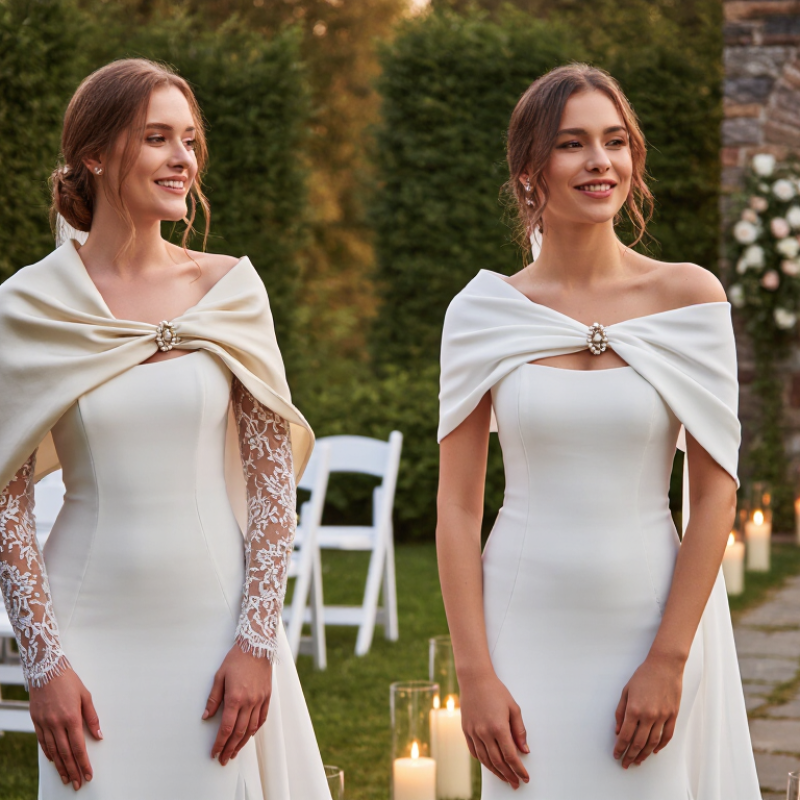
For a hands-free wedding look, drape the pashmina evenly over your shoulders, letting both ends fall forward. Fold one end across your chest and overlap it with the other near your collarbone. A 20–25 mm brooch can hold the layers without dominating the outfit. Choose a smooth clasp that closes securely, and position it through the folded fabric rather than near a loose edge. Keep it gentle.
Before pinning, check how the fabric responds. Fine silk or loosely woven cashmere may snag or stretch under a heavy ornament, even when the brooch is small. Test the pin on a hidden fold, then fasten it through two or three layers at the shoulder or upper chest. Make sure the point is fully closed and does not press against your skin.
Walk, sit, and raise your arms once; the wrap should stay in place without pulling. If it shifts, adjust the fold instead of forcing the pin tighter. A slightly uneven drape can look more natural than a strained, perfectly symmetrical one.
For very delicate fabric, a discreet garment-safe clasp or a different fold may be kinder.
Conclusion
For an elegant wedding look, begin by checking the pashmina’s fiber quality and labeling. Cashmere standards use a maximum average fiber diameter of 19 microns, so understanding the material can help you choose a soft, comfortable wrap. A stole around 70 × 200 cm offers versatile coverage and enough length for several polished styles.
For a classic shoulder wrap, fold the scarf to about one-third of its width and arrange it across your shoulders, setting the front at a graceful 45-degree angle. For a one-shoulder cascade, drape it diagonally and anchor it roughly 30 cm below the collarbone. If you want a hands-free option, secure a neat fold with a 20–25 mm brooch. These simple techniques make how to wrap a pashmina scarf for a wedding easy to adapt to your outfit and the occasion.

 U-Rare Fashion